- Source:
- Raindrop Cake/Facebook / @raindropcake
- Tags:
- Japan / Mochi / New York / Raindrop Cake
Related Article
-

Sailor Moon Cafe Opens In Japan With Colorful And Nostalgic Character-Themed Menu
-
Sakura Shaped Pasta Turn Any Dish Into Your Own Personal Hanami
-

Japanese Fast Food Chains Turn Themselves Into A Power Ranger Style Superhero Team
-

Hypnotic Time Lapse Pulls You Through A Tokyo That Never Stops Moving
-
Make a romantic splash with these limited edition Magikarp necklaces
-
Starbucks Japan Offers Pudding a la mode Frappuccino, Transforms Into Retro Japanese Coffee House For Limited Time


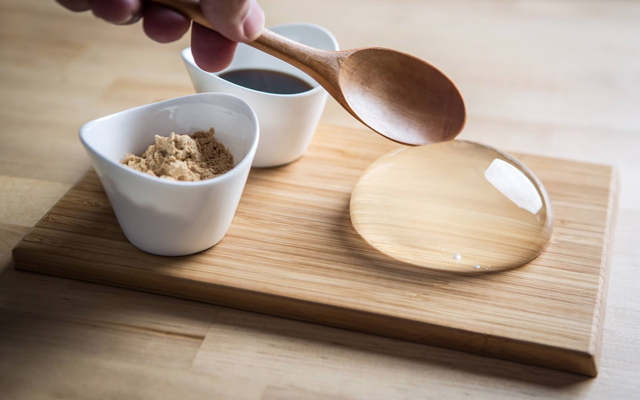
The Raindrop Cake is the newest culinary trend in New York, a translucent dollop of mineral water mixed with gelatin or agar, served with roasted soybean flour and sugar cane syrup. Created by New York City-based chef Darren Wong, people are rushing to NYC’s Smorgasburg to get a taste.
As weird and innovative as it may seem, the Raindrop Cake was actually inspired by a traditional Japanese dessert — Mizu Shingen Mochi. It is popular in Japan not just for its delicious combination with the soybean flour and syrup, but also for its delicate, crystal-like appearance.
But people have also likened it to breast implants, which is also true. You can get it at Smorgasburg for 8 USD, although you would likely be able to eat Mizu Shingen Mochi in Japan for about half the price (just saying).
As the name suggests, the Raindrop Cake has the texture of water — it doesn’t melt in your mouth, but rather liquifies into a mouthful of H2O. And just like water, it will evaporate if you leave it out in the open for too long, so you’ll want to eat it before it’s gone.
Wong told Slate that it took a lot of trial and error to give the cake the perfect consistency, but it looks like New Yorkers are loving the final product.
Source: Raindrop Cake/Facebook
Source: Raindrop Cake/Facebook
Source: Raindrop Cake/Facebook
Wong also shared that the Raindrop Cake reminds him of “that scene from A Bug’s Life where they drink water drops off of leaves,” and that it “tastes like eating a giant raindrop.” The flour and syrup give it a sweet kick, though, so your tastebuds won’t be left wanting of some sugary flavor.
The cake is visually and gustatorily stimulating, which is one of the biggest reasons Wong was inspired to make it.
As for the Japanese who have long been familiar with the Mizu Shingen Mochi, most seem to be celebrating the fact that it has entered the Western culinary world, but are also quite surprised all the same.
And if you're curious but don't want to dish out $8 (or don't live in New York), you can try making something similar at home with this Sakura Mizu Shingen Mochi recipe by Little Miss Bento.