Related Article
-

Convenient store worker commemorates her first time getting yelled at with death glare self-portrait
-
Japanese Artist’s Dark, Deep And True Illustrations Will Definitely Make You Think
-

Giving birth in your 40s? A Foreigner Husband? Two heart-warming comics loved by Japanese housewives
-

Not Knowing What To Do In An Earthquake, This Hamster Did The Adorable!
-

The Adorable Mini-Gardens And Animal Homes Of Japanese Countryside Drainage Pipes
-

Daughter Adorably Invents Magical “Laundry Folding Machine” For Her Mother’s Birthday


While many people might imagine “Japanese fashion” as the colorful and extravagant Harajuku street fashion, or perhaps the traditional kimono, it’s obvious that Japanese fashion is a multi-faceted element of the country’s complex culture.
Although we’ve seen the evolution of Japanese beauty and fashion in the one minute video “100 Years of Beauty,” Nara University has recently released a video of one of their own projects showcasing the long history of Japanese women’s fashion.
Utsukushiki Project
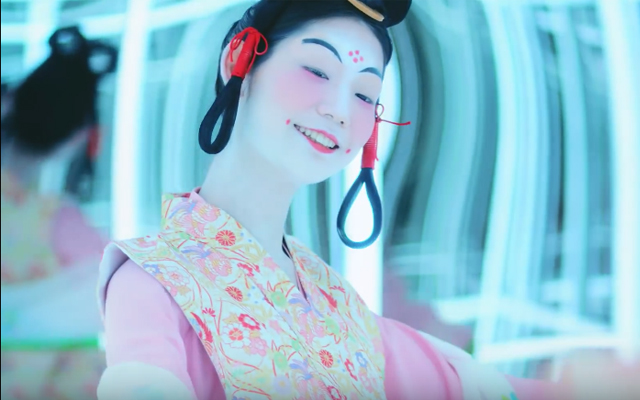
Nara University’s “Utsukushiki” (美し記) project introduces the ideal fashion of women of various periods, as closely examined through old paintings and literature. The stylishly compiled video was made in a collaborative effort between many of the university’s art and history departments, and each representative look was supervised by Isao Tsuge, a beauty director who has worked on historical dramas and films like Shin Gojira.
Jōmon-Kofun Period (〜300 BC〜538 AD)
The women of this time can be seen wearing a pompadour-like hairstyle and red triangles painted under their eyes. In contrast to what most might expect, their clothing is colorful and adorned with elaborate patterns.
Source: YouTube
Nara Period (710〜784)
Taking inspiration from Kisshōten, a Japanese female divinity, the face is white while the cheeks are red, and a red marking is painted on the forehead.
Source: YouTube
Heian Period (794〜1185)
Styled after the world of “The Tale of Genji,” the women of this era wore Jūnihitoe (kimono worn by court-ladies), white makeup, and carried large, elaborately painted fans.
Source: YouTube
Taishō Period (1912〜1926)
This period introduces western-style fashion with a long skirt and a chic bob. The look was inspired by Naomi, a titular character of the novel “Naomi” by Junichiro Tanizaki.
Source: YouTube
Get the behind-the-scenes look into the making of the stylish project in this short documentary.