- Source:
- Japaaan Magazine / Makuake / Orinigiri / 新田知生
Related Article
-

Artist Beautifully Combines Japanese “Spiritual Birds” And Trees To Illustrate The Four Seasons
-

Sado Island Releases Infectious Heavy Metal Song To Promote City Known For Its Ancient Gold Mine
-

Japanese Artist Performing A Dark Age Castle Drawing Is Mesmerizing
-

Japan’s KitKat Museum Shows Off 300 Flavors Of KitKats!
-
The Not-So-Traditional But Delicious Sushi Toppings Of Kaiten-Zushi
-

Change Your RPG Job Class With These Black And Red Mage Hoodies


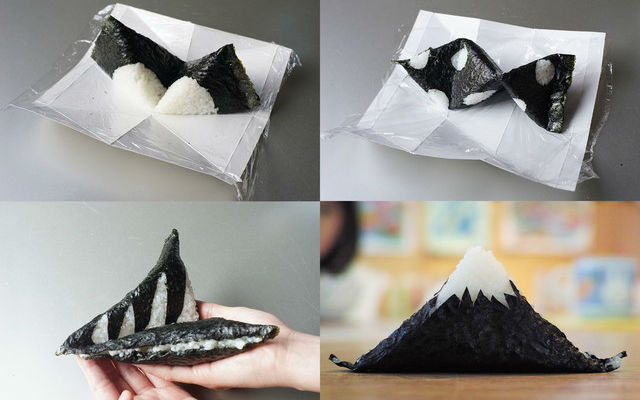
Origami, the traditional paper folding art of Japan, has such a global presence and appreciation that at times it is hard to even associate the practice with the country. Onigiri, or rice balls, are also a traditional Japanese treat gaining popularity because of the ease with which they can be made, and the variety of fillings they can offer. As with all things art and food, evolution is inevitable, however. However, we didn't quite expect to see the two collide like this. What started out as a volunteer activity effort after the 2011 Tōhoku earthquake and tsunami has led to a combination of onigiri and origami that lets you wrap your rice balls in origami shapes!
Mt. Fuji
Cleverly called "Orinigiri", the culinary art fusion is based on pre-creasing and folding origami paper in accordance to your desired shape, then setting a plastic wrap on top of it to hold the paper in place. On top of the wrap you lay down a sheet of nori (seaweed), and then the rice and fillings of your choice. After that, you carefully fold the onigiri as if it were origami. Winner of the the 2016 Good Design Award, the Orinigiri project keeps traditional art alive, while spicing up an everyday Japanese snack with some added style.
Source: Makuake
Source: Makuake
While it is currently seeking crowdfunding for commercial release, instructional videos have been released for those who are ready to challenge it on their own. English descriptions are also available on their website.
Flying Bird
Tetra Associate
Tetra Share
Hopefully the crowdfunding effort will be successful, allowing for wide access to the goods necessary for everyone to make Orinigiri at home. Even without that decided, however, those more artistically inclined can challenge the practice at home by preparing some origami paper, creasing carefully, and following the videos. While the site is mostly in Japanese, Orinigiri's inquiry page (top right button), may be able to answer questions in English.
Source: Makuake
Source: Makuake
Source: Makuake
Source: Makuake
Source: Makuake
Source: Makuake