Source: PR Times
First Kitchen serves up a traditional confectionery twist on Japan’s maritozzo craze
- Tags:
- First Kitchen / maritozzo / Sweets
Related Article
-

Bloody Beherit sweets summon The God Hand in terrifying Berserk dessert
-
Nagasaki Minami Yamate Pudding Releases Fresh Strawberry Pudding
-
Japanese artist turns a favorite traditional summer treat into a kawaii bracelet
-
Melt into satisfaction with this Cacao Rare Cheesecake
-
Fukuoka hotel serves up delicious fall maritozzo special
-
Popular “perfectly shaped” fluffy and round pancake steamed buns return in Japan


If Japan as a reigning and defending trendy sweets champion at the moment, it is almost certainly the maritozzo. Originally from Rome, the cream-stuffed sweet brioche buns have recently become the featured pastry at cafes and bakeries throughout Japan, with adding their own unique ingredients twist--even 7-Eleven has jumped in on the craze with an extra thick dorayaki hybrid.
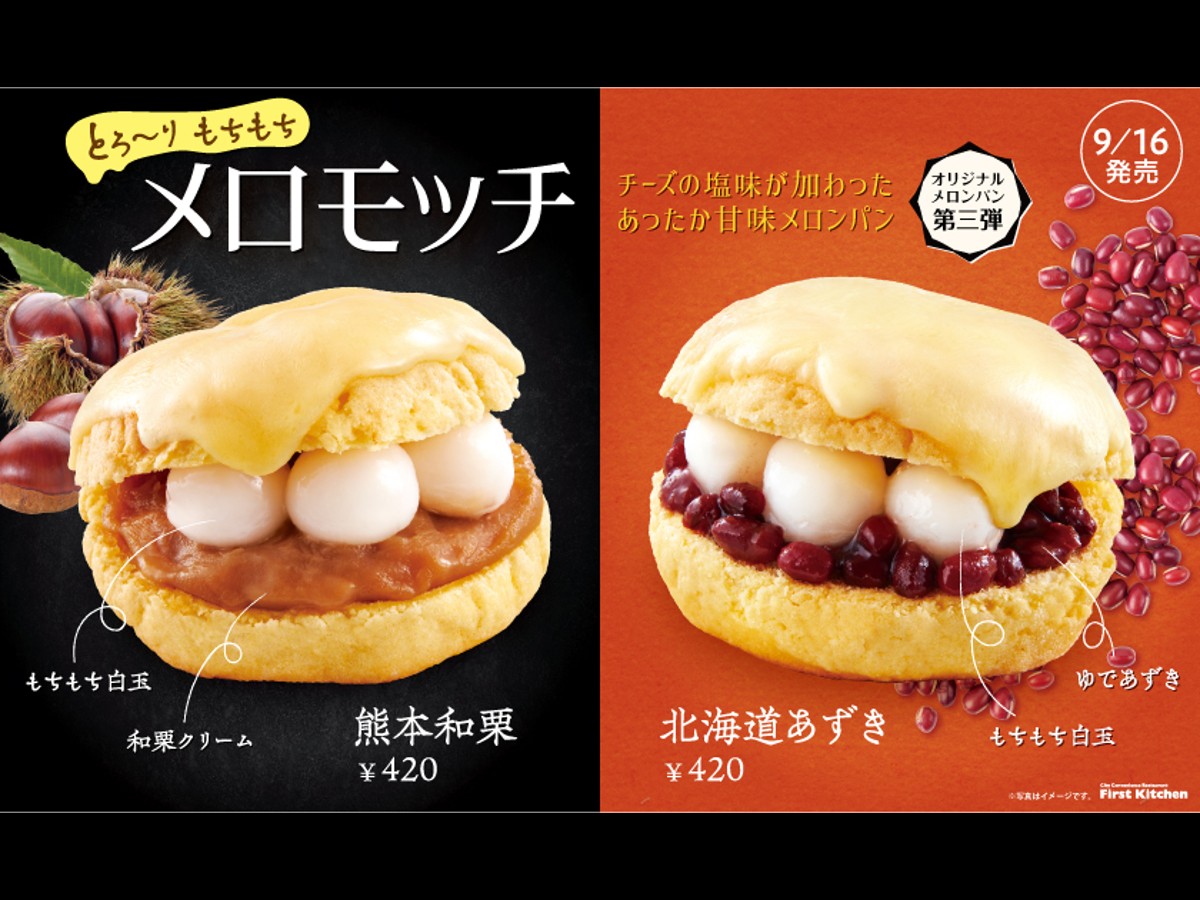
Japanese fast food chain First Kitchen has also tried their hand at putting a twist on the popular treat, with their custom Melotozzo being a big hit. The Meltozzo is a combination of maritozzo melon bread (a type of sweet bun, popular in Japan for it's rocky shape that resembles a cantaloupe) using their original melon read as buns.
To follow the success of their Melotozzo, First Kitchen is releasing two new versions that incorporate traditional Japanese sweets into it. Their new Melomocchi series introduces two spins on Melotozzo that add the chewy texture of mochi and taste of regional Japanese sweets.
The Melomocchi Kumamoto Japanese Chestnut flavor uses First Kitchen's baked melon bread with a burnt butter flavor topped with melted cheese. Sandwiched inside is a paste of Japanese chestnuts from Kumamoto Prefecture, currently in season, and chewy shiratama mochi dango dumplings.
Meanwhile, the Melomocchi Hokkaido Azuki flavor takes the buttery melon bread buns and fills it with special boiled azuki red beans grown in Hokkaido to add a classic Japanese confectionery flavor to the shiratama dango.
Both are currently available at the Ofuna, Inage Station, Shimokitazawa, and nonowa Nishi Kokubunji First Kitchen locations in Japan.